Building your glutes takes more than simply doing a few extra sets of hip thrusts and hoping for the best.
If growing your glutes is one of your main fitness goals, you need a plan that challenges your muscles, gives your body enough time to recover, and provides the fuel it needs to actually grow. At the same time, focusing heavily on one muscle group doesn’t mean you should forget about the rest of your body.
That’s the idea behind Booty Builder 2.0.
This program is designed to help you maximize glute growth while still building a strong, balanced physique. The goal isn’t to destroy your legs and glutes every time you step into the gym. Instead, it’s about being intentional with your training intensity, choosing exercises that give you a reason to be there, and understanding that recovery and nutrition are just as important as the workout itself.
Because when it comes to building muscle, more isn’t always better.
Better training is better.
Your Glutes Need a Reason to Grow
One of the biggest mistakes people make when trying to grow their glutes is assuming that they need to train harder every single session.
There’s a difference between working hard and simply doing more.
Your muscles respond to a training stimulus. When you progressively challenge them over time, your body adapts. This can mean gradually increasing the weight you’re lifting, getting more repetitions with the same weight, improving your technique, or becoming stronger and more controlled through each movement.
The goal is to give your glutes a reason to adapt.
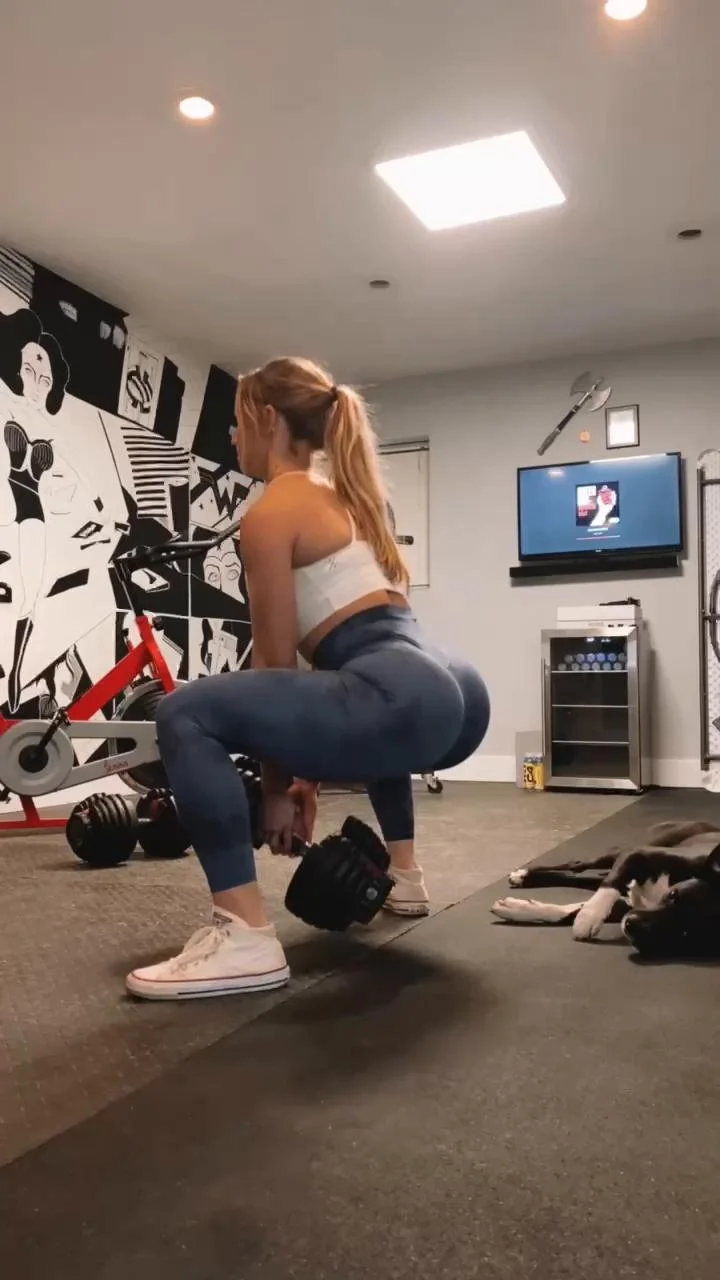
Exercises like hip thrusts, squats, Romanian deadlifts, Bulgarian split squats, lunges, step-ups, and different forms of hip abduction can all play a role in a glute-focused program. But simply having these exercises in your workout isn’t enough.
How you perform them matters.
If you’re rushing through every repetition, using momentum, or adding weight before you’re ready to control it, you may be making the exercise harder without necessarily making it more effective.
Booty Builder 2.0 is about being intentional.
Instead of asking, “How much can I lift today?” try asking, “How well can I perform this movement today?”
That small change in mindset can make a big difference.
Intensity Matters — But So Does Control
There is a time and place to push yourself.
A good workout should challenge you. You should finish some sets knowing that you had to work for those final repetitions. But every set doesn’t need to feel like a competition.
Training with intensity doesn’t mean taking every exercise to absolute failure.
Sometimes the best set is the one where you finish knowing you could have squeezed out another repetition or two while maintaining good form. Other times, especially with certain isolation exercises, you may intentionally push closer to failure.
Learning the difference is part of becoming a better lifter.
Pay attention to your technique. Pay attention to your energy. Pay attention to how your body feels.
If your form starts falling apart halfway through a set, adding more weight probably isn’t the answer.
Your goal isn’t simply to survive the workout.
Your goal is to create a quality training stimulus that you can recover from and repeat consistently.
That last part is important.
Consistency Beats the Perfect Workout
You don’t need a perfect workout to build your glutes.
You need months of good workouts.
It’s easy to get caught up in finding the “best” exercise or the perfect number of sets and repetitions. But the truth is that your results will come from what you consistently do over time.
One great leg day won’t transform your physique.
Neither will one week of eating perfectly.
What makes the difference is showing up again and again.
There will be days when your workout feels amazing. You’ll feel strong, connected to the movement, and ready to add another plate to the bar.
There will also be days when your energy is lower and the same weight feels heavier than usual.
That’s normal.
Your body isn’t a machine, and your performance won’t be identical every day. Instead of becoming frustrated when a workout isn’t your strongest, look at the bigger picture.
If you’re training consistently, progressing over time, eating enough, and recovering properly, you’re doing the things that matter.
Recovery Is Part of the Program
This is something that doesn’t always get enough attention in glute-building programs.
People love talking about training.
They love talking about exercises.
They love talking about how much weight they’re lifting.
But recovery?
Not nearly as exciting.
Still, recovery is a huge part of building muscle.
When you train, you’re creating stress and fatigue. Your body then needs time and resources to repair and adapt. If you constantly train hard without giving yourself enough recovery, you may find that your performance starts to suffer.
You feel tired.
Your workouts feel heavier.
Your motivation drops.
And eventually, progress can slow down.
That’s why rest days aren’t something you need to feel guilty about.
Rest isn’t skipping your fitness routine.
Rest is part of your fitness routine.
Sleep is especially important. Try to make quality sleep a priority whenever possible. Your body does a lot of its recovery work while you’re sleeping, and consistently getting enough rest can support both your training performance and overall well-being.
Recovery also means paying attention to soreness and fatigue.
Being sore doesn’t automatically mean you had a great workout, and not being sore doesn’t mean your workout didn’t work.
Don’t use soreness as your scoreboard.
Use performance, consistency, strength, technique, and progress over time.
You Can’t Build Without Fuel
If you want to build your glutes, you also need to think about what you’re putting on your plate.
Food isn’t something you need to “earn” with exercise.
It’s fuel.
Your body needs energy to train, recover, and support muscle growth. Protein provides amino acids your body uses to repair and build muscle tissue, while carbohydrates can provide valuable energy for demanding workouts. Dietary fats also play important roles in overall health.
You don’t have to make nutrition complicated.
Start with the basics.
Build meals around quality protein sources. Include carbohydrates that give you energy. Eat fruits and vegetables. Include healthy sources of fat. Drink enough water.
And most importantly, make sure you’re eating enough.
A common mistake is trying to build muscle while constantly under-eating because you’re afraid of gaining body fat.
Your body needs resources to build.
That doesn’t mean you need to dramatically increase your food intake or “bulk” without a plan. It means understanding that muscle growth requires adequate nutrition, and consistently trying to train hard while eating too little can make the process much more difficult.
Your physique goals should be supported by your nutrition, not fought against it.
Building a Balanced Physique
Booty Builder 2.0 isn’t about glutes and nothing else.
A strong lower body looks even better when it’s part of a strong, balanced physique.
That’s why your training shouldn’t completely ignore your upper body.
Training your back, shoulders, chest, and arms can help you develop strength and create overall balance. It can also make your workouts more enjoyable because you’re not constantly repeating the same movements.
Think of your body as a whole.
You can have glute growth as your primary goal while still training everything else.
In fact, becoming stronger throughout your entire body can improve your overall training ability. A stronger core can help you control compound movements. A stronger back can support your positioning during exercises such as Romanian deadlifts. Stronger legs can help you perform unilateral movements with more stability.
Your goal isn’t to build one body part at the expense of everything else.
It’s to build a physique that feels strong, capable, and balanced.
Progressive Overload Without the Pressure
If you’ve been training for a while, you’ve probably heard the term “progressive overload.”
It sounds complicated, but the basic idea is simple: over time, you need to gradually challenge your body.
That doesn’t always mean adding more weight.
Maybe you perform 8 repetitions this week and 10 repetitions with the same weight a few weeks later.
Maybe your technique improves.
Maybe you can use a heavier weight while keeping exactly the same form.
Maybe you increase your range of motion or improve your control.
All of these can be forms of progress.
Don’t feel like you have to add weight every single workout.
Sometimes progress is slow.
That’s okay.
Your job is to keep giving your body a reason to improve without rushing the process.
The Mind-Muscle Connection
When you’re training for glute growth, learning how to actually feel the target muscle working can be useful.
This doesn’t mean you need to obsess over whether you feel a perfect “burn” during every exercise.
Instead, focus on your movement.
Think about what the exercise is supposed to do. Control the repetition. Avoid rushing through the hardest part of the movement. Give yourself enough time to establish good positioning before each set.
For example, during a hip thrust, don’t just think about moving the weight from point A to point B.
Think about driving through the movement with control and finishing the repetition without turning it into a full-body struggle.
The more comfortable you become with an exercise, the easier it can be to focus on execution rather than simply completing the set.
Don’t Chase Someone Else’s Results
One of the hardest parts of fitness today is remembering that your body is your body.
Social media makes it incredibly easy to compare yourself with other people.
You see someone else’s glutes, workout numbers, meal plan, progress photos, or transformation and immediately wonder why you’re not getting the same results.
But you don’t know everything that happened behind that photo.
You don’t know how long they’ve been training.
You don’t know their genetics, lifestyle, recovery, nutrition, or starting point.
Your progress doesn’t need to look like someone else’s.
Instead, focus on your own numbers.
Are you getting stronger?
Is your technique improving?
Are you becoming more consistent?
Are you recovering better?
Are you feeling stronger and more confident?
Those are meaningful forms of progress too.
Give Your Body Time
Glute growth doesn’t happen overnight.
It’s tempting to look for fast results, especially when fitness programs and social media often make transformations look incredibly quick.
But building muscle is a process.
There will be weeks when you notice a difference, and there will be weeks when you feel like nothing is changing.
Keep going.
Take progress photos if they’re helpful. Track your workouts. Write down your weights and repetitions. Pay attention to how your clothes fit and how you feel during training.
Give yourself something more reliable than the mirror from day to day.
Progress becomes easier to see when you look back over months rather than judging yourself based on one morning.
Booty Builder 2.0 Is About More Than Glutes
At the end of the day, Booty Builder 2.0 isn’t simply a collection of exercises designed to make your glutes grow.
It’s a mindset.
Train with purpose.
Push yourself when it’s appropriate.
Respect your recovery.
Fuel your body.
Build strength.
Stay consistent.
And remember that your goal isn’t to destroy yourself in the gym. Your goal is to become stronger and give your body the right environment to adapt.
Your glutes need training, but they also need recovery and nutrition.
Your body needs challenge, but it also needs rest.
And your fitness journey needs patience.
So show up, put in the work, eat enough, recover well, and give the process time.
Train hard. Recover harder. Fuel your body. Build a physique you’re proud of.
That’s what Booty Builder 2.0 is all about.