Every time I tell someone I’m following a glute-focused program, I get the same look. Usually followed by the same question: “So that’s it? Just your butt?”
It’s a fair thing to wonder. The name sounds narrow. Pictures of hip thrusts and resistance bands don’t exactly say “full-body training.” But here’s the thing: a well-built glute plan is one of the more complete workout routines you can run, and the 6-Week Back & Booty Builder Challenge is a good example of why.
In this article I’ll walk through what the plan really trains, which muscles get worked besides your glutes, what’s honestly missing, and how to fill those gaps if you want a truly all-round routine. No hype, just what the exercises actually do.
Why Glute Programs Get a Narrow Reputation
Part of the problem is marketing. Fitness brands love a catchy label, and “booty” sells better than “posterior chain development.” So programs get stamped with one body part, and people assume everything inside is an isolation exercise.
The other part is how glute training looks on social media. Short clips of kickbacks and banded walks rack up views. Heavy rows and deadlifts, not so much. You end up with a skewed picture of what these routines contain.
But your glutes don’t work alone. They’re the biggest muscle group in your body, and they connect to your hamstrings, lower back, hips, and core. You can’t train them properly without pulling all of those into the job. And once you add a serious back day, as this challenge does, you’ve covered a huge share of the muscle on your body.
What Makes a Workout Plan “Complete”?
Before we judge the challenge, we need a yardstick. A complete plan doesn’t have to train every muscle with equal volume. It should do a few basic things well:
- Cover the main movement patterns. Pushing, pulling, hinging, squatting, and carrying or bracing.
- Train the lower and upper body. Not just one half.
- Balance front and back. Too much of one side leads to posture trouble and nagging pain.
- Include progression. A plan that never gets harder isn’t really a plan.
- Leave room to recover. Rest days are part of the program, not a break from it.
Measured against that list, the challenge does well on most points. It hits hinging, squatting, lunging, and pulling in both vertical and horizontal directions. It has a built-in six-week progression. It schedules three days off. The one pattern it skips is pressing, and we’ll get to that.
Where Each Muscle Group Fits In
Let’s go through the week and see what’s actually being trained.
Glutes (obviously)
Monday and Thursday are the main glute days. Hip thrusts, Romanian deadlifts, split squats, kickbacks, and abductions train all three glute muscles: the gluteus maximus for power and shape, and the medius and minimus on the side of the hip for stability. Variety matters here. A hip thrust loads the glutes at the top of the movement, while a deadlift or lunge loads them in a stretched position. Doing both is smarter than doing either one alone.
Hamstrings
The Romanian deadlift is, honestly, as much a hamstring exercise as a glute one. The cable pull-through and back extensions also pull the hamstrings in. If you’ve ever felt sore at the back of your thighs after Monday, that’s why. Strong hamstrings help protect your knees and make everything from sprinting to climbing stairs feel easier.
Quads
People assume a glute plan ignores the fronts of the legs. It doesn’t. Bulgarian split squats, lunges, and goblet or sumo squats all work the quads hard, especially when you lower slowly or step into a deep position. You won’t build the biggest quads on earth with this plan, but they will get a good, steady dose of work.
Inner and outer thighs
Abductions and banded lateral walks train the muscles on the outside of the hips. Sumo squats and wide-stance work bring in the adductors on the inner thigh. These smaller muscles don’t get much attention in most routines, but they help keep your knees tracking properly and your pelvis steady when you walk or run.
Lats and upper back
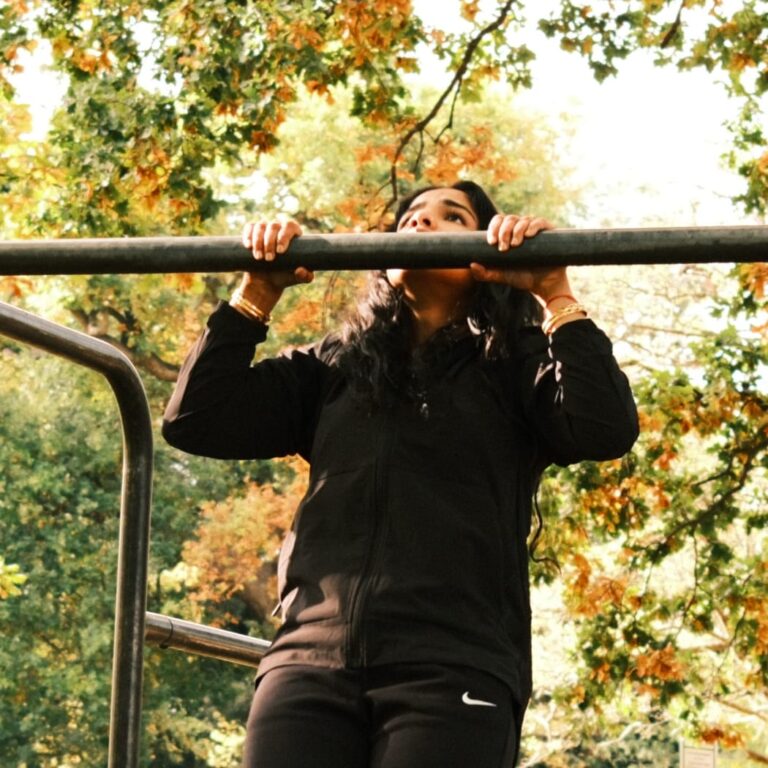
This is where the “back” in the name pays off. Lat pulldowns, pull-ups, straight-arm pulldowns, and every kind of row build the lats and the muscles between your shoulder blades. That’s two full back sessions every week, with 10 to 12 sets of heavy pulling on each. That’s more back volume than plenty of dedicated upper-body programs.
Rear shoulders and traps
Face pulls and rear delt flies target the small muscles at the back of your shoulders and around your shoulder blades. These are the muscles that tend to get neglected and then complain when you spend all day at a desk. Training them helps your shoulders sit back instead of rounding forward.
Lower back and core
Here’s one that surprises people. You won’t see a single crunch in this plan, yet your core is working constantly. Deadlifts, rows, hip thrusts, and lunges all force your midsection to brace and keep your spine stable. Back extensions train the spinal erectors directly. This kind of core work, resisting movement rather than creating it, is what carries over into real life.
Arms and grip
Your biceps and forearms get a solid workout without any curls. Every row and pulldown uses them, and holding heavy dumbbells and a barbell builds grip strength, which tends to be the first thing to give out on pulling days.
Movement Patterns at a Glance
Here’s a quick map of what the plan covers and where it shows up.
| Movement | Main exercises | Muscles trained |
|---|---|---|
| Hip hinge | Romanian deadlift, cable pull-through, back extension | Glutes, hamstrings, lower back |
| Hip extension | Hip thrust, glute bridge | Glutes, hamstrings |
| Squat and lunge | Split squat, lunges, goblet or sumo squat | Quads, glutes, adductors |
| Side-to-side stability | Abductions, banded lateral walks | Glute medius, hip stabilizers |
| Vertical pull | Lat pulldown, pull-up, straight-arm pulldown | Lats, biceps, upper back |
| Horizontal pull | Barbell, dumbbell, cable, T-bar rows | Mid-back, lats, rear shoulders, biceps |
| Shoulder health | Face pull, rear delt fly | Rear delts, rotator cuff, traps |
Look at that list and it’s hard to call it a one-muscle program. It’s closer to a lower-body and pulling routine that happens to put extra emphasis on the glutes.
The Posture and Everyday Life Bonus
Most of us spend hours sitting. Sitting switches off the glutes, tightens the hip flexors, and rounds the upper back. A routine that strengthens your glutes and your upper back is almost the exact opposite of a day at a desk.
You might notice some small things after a few weeks. Standing feels easier. Carrying groceries or a toddler doesn’t wear out your lower back as fast. Climbing stairs gets less tiring. These aren’t flashy results, and they won’t show up in a mirror, but they’re often what people end up valuing the most.
There’s also a balance benefit. Many people who train only the front of their body, with lots of bench press, crunches, and quad work, drift into rounded shoulders and tight hips. Pulling more than you push, which is what this plan does, tends to counter that.
What the Plan Doesn’t Cover (Being Honest)
I’d be misleading you if I said it covered everything. It doesn’t. Here’s what’s thin or missing:
- Pressing. There’s no bench press, push-up, or overhead press, so chest, front shoulders, and triceps get very little direct work.
- Direct ab work. The core is trained indirectly, but if you want a stronger, more visible midsection, you may want a few specific exercises.
- Cardio. There’s walking on rest days and a cool-down in week 6, but no real conditioning.
- Calves. They get some work from lunges and walking, but not much beyond that.
None of this is a flaw in the program. It’s a trade-off. Four days a week can only hold so much, and the plan chose to go deep on the back of the body instead of spreading thin across all of it.
How to Fill the Gaps (Without Wrecking Your Recovery)
If you want the plan to be truly all-round, you can add a small amount of extra work. The key word is small. You’ve got three days off for a reason, and this program already asks a lot of your legs.
Here’s a simple add-on you could do on Wednesday or Saturday, about 20 to 25 minutes:
| Exercise | Sets x reps | Fills the gap |
|---|---|---|
| Push-up or dumbbell bench press | 3 x 8-12 | Chest, triceps |
| Dumbbell shoulder press | 3 x 8-12 | Front and side shoulders |
| Plank or dead bug | 3 x 30-45 sec | Core |
| Standing calf raise | 2 x 15-20 | Calves |
Keep the effort moderate. This isn’t meant to be a hard fifth session. Think of it as a quick top-up that keeps your upper body balanced.
For cardio, a 20 to 30 minute brisk walk, an easy bike ride, or a light jog on a rest day does the job. If your legs are sore from Monday or Thursday, walking is the better pick.
Who Is This Plan Actually Good For?
A few types of people tend to do well with this kind of program:
- Desk workers who want to undo the effects of sitting.
- Anyone who has been doing lots of quad-heavy or push-heavy training and wants some balance.
- Runners and hikers who want stronger hips and glutes to support their legs.
- People who like structure. If you do better with a clear plan than a “see how you feel” gym session, the defined schedule helps.
- Women and men both. Despite the name, the training works the same way for everyone.
It’s less ideal if your main goal is a big chest and arms, or if you’re training for a sport that demands lots of pressing power. In that case you could still use it as a lower-body and back block, and pair it with a separate upper-body plan.
Common Mistakes That Make It “Just a Glute Plan”
Funny enough, how you run the program can make it narrower than it needs to be. Watch out for these:
- Skipping the back days. Some people treat Tuesday and Friday as optional because they came for the glutes. That throws away half the plan.
- Going too light on rows and pulldowns. If you can easily do 20 reps, the weight is too low. Push yourself on the upper-body days like you do on the lower-body ones.
- Letting your lower back do the work. If you feel hip thrusts and deadlifts mostly in your lower back, lower the weight and focus on squeezing your glutes.
- Not tracking weights. Without numbers, you won’t know if you’re progressing, and progress is the whole point.
- Skipping rest days. More isn’t automatically better. Recovery is when muscle actually grows.
A Realistic Look at Six Weeks
It’s worth saying plainly: six weeks won’t give you a brand new body. What it should give you is a noticeable jump in strength, much better control of the movements, and a solid base to build on.
The progression is built to help with that. Weeks 1 and 2 are for learning the lifts with plenty of reps left in reserve. In weeks 3 and 4 you add weight whenever you hit the top of a rep range. Week 5 adds an extra set to your first two exercises and slows the lowering phase, then week 6 is your heavy week, finished off with some easy walking and stretching.
After that, you’ve got options. You can repeat the program with heavier weights, swap in a few different exercises, or move on to a new plan with your upper body as the focus.
Frequently Asked Questions
Is this plan just for women?
No. Everyone has glutes, hamstrings, and a back. The program is built around how muscles work, not around gender. Anyone who wants stronger hips and a stronger back can use it.
Will it make my legs bulky?
Muscle growth takes time, enough food, and consistent heavy training. Over six weeks you’re far more likely to notice firmer, stronger legs than anything dramatic. If you do like the size you gain, great. If not, you can ease off the heaviest weights.
Can I do it at home?
Yes, with some swaps. Dumbbells or a loaded backpack can replace barbells, resistance bands can replace most cable and pulldown movements, and a doorway pull-up bar or suspension trainer covers the pulling.
Do I need to do cardio too?
Not required, but it’s a good idea for general health. Walking on rest days is enough for most people, and you can add something more intense if you enjoy it.
What if I’m a beginner?
Start with lighter weights and keep more reps in reserve, and spend the first two weeks learning the movements. If anything hurts in a sharp way, especially in your lower back, stop and check your form or ask a qualified trainer.
The Bottom Line
So, is it only for glutes? No. The name gets the attention, but what’s inside is a balanced lower-body and pulling program that builds your glutes, hamstrings, quads, back, rear shoulders, and core in one weekly plan. Add a small top-up for pressing and abs, and you’ve got a routine that covers nearly everything.
If you’ve been put off because it sounds like a one-body-part routine, give it a fair look. Pick your four days, write down your numbers, and see how you feel after six weeks. You may find it’s a lot more complete than the title suggests.