Developing story. Details are changing quickly, so this article reflects reporting available as of October 1, 2026. We’ll update it as new information is confirmed.
Tennessee tried to execute Christa Pike on Wednesday night and did not finish the job. What happened inside the execution chamber at the Nashville prison is now the subject of an emergency court filing, a hospital stay, and a fresh round of questions about how the state carries out lethal injections.
Here is what has been reported so far, why it matters, and what remains unknown.
What happened Wednesday night
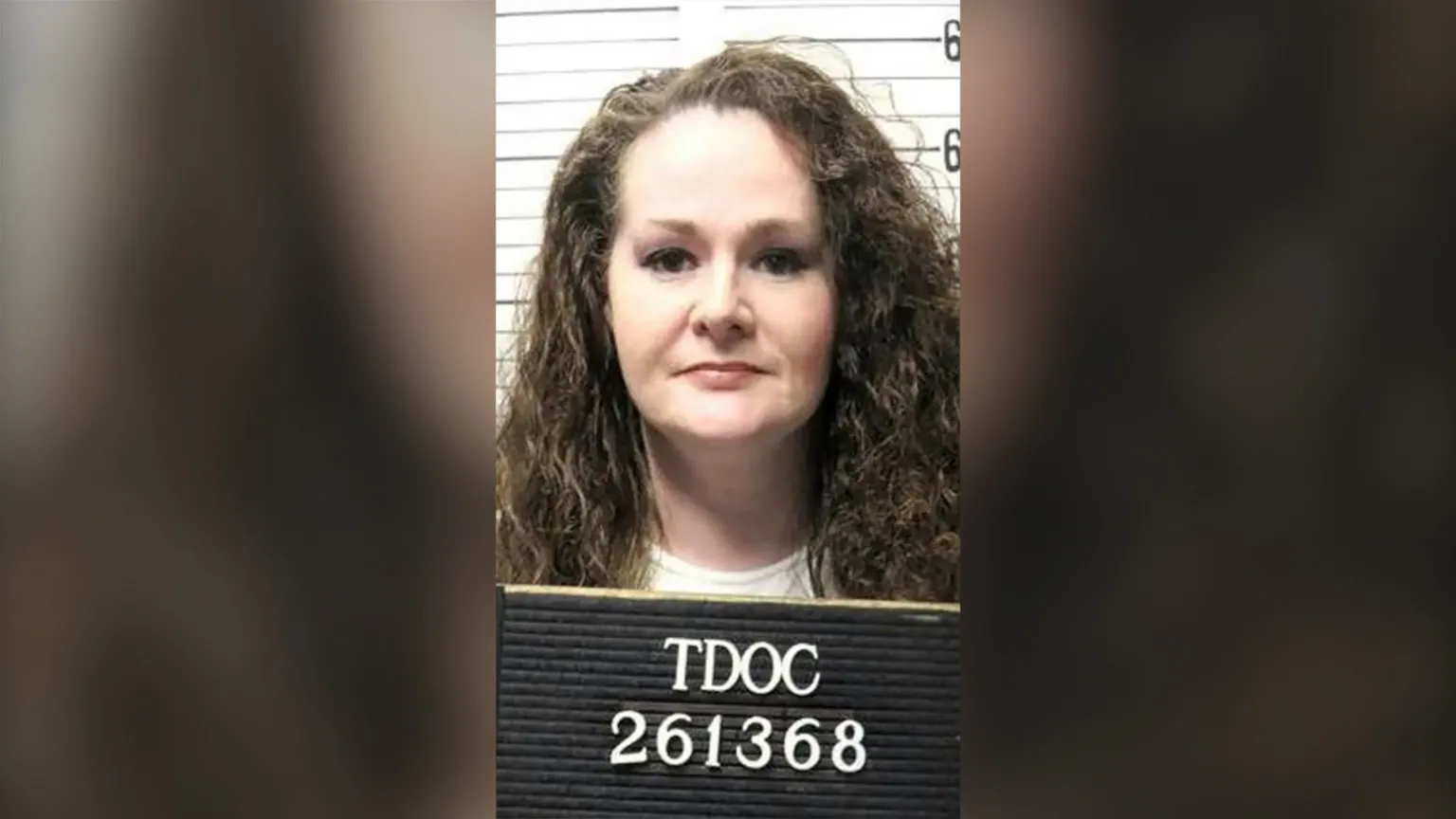
Pike, 50, is the only woman on Tennessee’s death row. Her lawyers said she was still alive after being given two syringes of lethal injection drugs. In a motion to the Tennessee Supreme Court, her federal public defenders wrote that witnesses reported pentobarbital was administered at 8:26 p.m. while she was still alive and snoring, and they asked the court to halt the execution right away. The Hill
Media witnesses said she was still alive when they were asked to leave the room at about 8:53 p.m. Her attorneys also noted that the curtain in the execution chamber came down twice. CBS News
Afterward, state officials said Pike had been transported to a hospital where she was receiving medical care. A court filing from Attorney General Jonathan Skrmetti did not say what condition she was in or which hospital she was taken to. Pike’s legal team said she was being treated at a nearby hospital. CBS News
In a statement, her lawyers said the state had once again failed to carry out a lawful execution.
A day of last-minute court rulings
The execution itself was only the end of a long and unusual day in the courts. A panel of the 6th U.S. Circuit Court of Appeals paused the execution earlier on Wednesday to give judges more time to review Pike’s legal challenges. Then the U.S. Supreme Court lifted that order hours later at Tennessee’s request, which allowed the execution to move forward. The Hill
The three liberal justices dissented. Justice Sonia Sotomayor wrote that she saw no reason to cut short the normal appeals process, especially given the grave consequences of a wrong decision.
Before all of that, Governor Bill Lee had already denied Pike’s request for clemency. Her lawyers had asked him to commute her sentence to life in prison without parole. Without a stay, the state had a clear path to proceed, and it did.
What witnesses described
The accounts from the room are some of the most striking parts of this story. An Associated Press reporter who served as a media witness said that at one point Pike looked toward prison officials and asked whether it was supposed to feel that way. CBS News
Another witness said a great deal happened behind a closed curtain while Pike was still alive. That detail matters, because the public and the press are only able to see parts of an execution. When the curtain is closed, what takes place is known only to those inside, and the public must rely on the state’s account.
Witnesses also described a series of unknowns about what exactly happened at the Nashville facility, which is part of why Pike’s lawyers moved so quickly to ask the courts to step in.
The Tennessee Department of Correction had told WBIR during the evening that Pike’s execution would still go forward on Wednesday. Hours later, the state’s own filing said she was at a hospital.
Why her lawyers saw this coming
Pike’s defense team did not raise these concerns for the first time on Wednesday. For months they argued that Tennessee’s lethal injection protocol could not be carried out safely on her.
Their case rested on her medical condition. Pike has a blood disorder called thrombocytosis, and her attorneys also pointed to difficulty accessing her veins. An anesthesiologist, Dr. Joel Zivot, wrote that her condition would very likely produce a bloody froth in her lungs. Her lawyers said this could amount to a torturous death. yahoo
In August, Knox County Criminal Court Judge Ward presided over a three-day evidentiary hearing on how Pike’s medical and mental health conditions would affect her execution. Her lawyers even suggested hanging as an alternative method.
Separately, her attorneys raised concerns tied to her history. They argued that housing Pike at an all-male facility for two weeks before the execution, and using all-male teams to remove her from her cell and strap her down, would be cruel given her history of sexual violence as a child. The Tennessee Supreme Court agreed to appoint a special master to look into whether this would violate her rights.
Pike also filed a lawsuit in Davidson County Chancery Court challenging the state’s revised protocol. That suit raised religious claims as well, arguing that limits on clergy would keep her Buddhist spiritual adviser out of the execution chamber.
A troubled record for Tennessee’s protocol
Wednesday’s events add to a pattern that critics of Tennessee’s process had already pointed to.
In August 2025, the execution of Byron Black drew controversy and was described as seemingly painful. Then in May 2026, the state failed to execute Tony Carruthers after medical staff were unable to establish IV access for more than an hour. wsmv
The doctor overseeing Pike’s execution, Mark Fowler, was also involved in the failed Carruthers attempt. He confirmed in August that he would serve as the physician for Pike’s execution. After the Carruthers failure, federal defenders called for a pause in executions across Tennessee.
Pike’s own lawyer warned at the time that her medical conditions could lead to a torturous execution. Now her team is pointing to Wednesday night as evidence that those warnings were right.
The case behind the execution
Any honest account of this story has to include the crime that put Pike on death row, because it is the reason the state sought her execution.
In January 1995, Pike, then 18, took part in the torture and killing of 19-year-old Colleen Slemmer in Knoxville. The case is often called the “Job Corps murder,” because the people involved were all in that program. Pike was convicted of first-degree murder in 1996 and sentenced to death. Two others were also involved: her then-boyfriend Tadaryl Shipp, who was 17, and Shadolla Peterson, who was 18.
Slemmer’s family has waited decades for this case to end. Her niece spoke publicly in the days before the scheduled execution and said it should not have taken 31 years. For the family, Wednesday’s outcome is another delay in a case that has already been drawn out for most of their lives.
Pike’s defense has argued for years that her age at the time of the crime, her history of abuse, and her later diagnoses of bipolar disorder and post-traumatic stress disorder should keep her from being executed. Her lawyers say she suffered severe childhood abuse and neglect. She also spent about 30 years in solitary confinement, according to earlier reporting by the Nashville Banner.
These facts do not erase what happened to Slemmer, and Slemmer’s death does not remove the legal questions about how the state carries out a sentence. Both things can be true at the same time.
A historic execution that did not happen
Had the execution been completed, Pike would have been the first woman executed in Tennessee in more than 200 years. Reports differ slightly on the exact year of the last one, with some saying 1819 and others 1820, but they agree it was more than two centuries ago.
That context is one reason the case drew so much national attention before Wednesday. It was not only a legal story but a historic one, and it has now become something more complicated.
What we still don’t know
Several important questions are open:
- Pike’s condition. The state said she was receiving medical care but did not give any details.
- Which hospital. Officials did not say where she was taken.
- What the courts will do. The emergency motion asking the Tennessee Supreme Court to halt the execution may now take a different shape, since the attempt has stopped.
- Whether the state will try again. There has been no confirmed public answer on whether Tennessee will try to carry out the execution a second time.
- What went wrong. The state has not yet given a full public explanation of how the drugs were given or why Pike survived two doses.
If you are reading this later, check these points against the latest reporting, because several of them may already have answers.
Why this matters beyond one case
Whatever a person thinks about the death penalty, a failed execution raises questions that people on all sides tend to take seriously. Supporters of capital punishment generally argue that if the state is going to impose the sentence, it has a duty to carry it out competently and humanely. Opponents say repeated failures show the method itself is unreliable.
Even setting those larger debates aside, a few practical questions will likely follow. Who reviews what happened in the chamber? Will the state release the details of the drugs, the timing, and the medical team’s actions? And will courts allow future executions in Tennessee to proceed while those questions are open?
For now, the facts are limited, the legal situation is still moving, and a woman at the center of it is in a hospital. That is where the story stands.